
Mumbai's premium real estate market is not only shaped by its infrastructure and skyline but also by the communities that have invested in, built, and sustained it for decades. Among these, the Gujarati community holds a unique and influential position in Mumbai's real estate ecosystem.
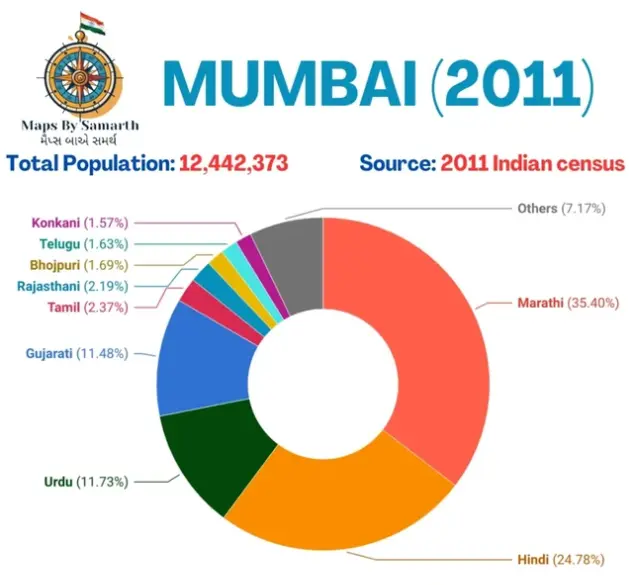
As per 2011 Census-based estimates, Gujarati communities account for approximately 11.5% to 12% of Mumbai's population, yet their presence in property ownership, development, and capital deployment is significantly higher, particularly across the Mumbai Metropolitan Region (MMR).
Maharashtra IGR data for February 2026 alone recorded over 13,000 property registrations, with a significant share falling in the ₹2 crore to ₹5 crore bracket a price range that maps closely to the upgrade preferences of established Gujarati families in these corridors.
This article explores the intersection of luxury living, entrepreneurship, and cultural heritage that defines the Gujarati community's influence in Mumbai's real estate market.
Historical Roots From Trade to Property Ownership
The relationship between the Gujarati community and Mumbai real estate is deeply rooted in a shared history of commerce and trade. Since the early 19th century, Gujarati merchants have migrated to Mumbai's islands, seeking refuge from instability in Gujarat and the Mughal-Maratha conflicts. These traders were actively involved in textiles, grains, shipping, & finance and established major commercial hubs in Bhuleshwar, Kalbadevi, and Zaveri Bazaar.
Over generations, this strong trading culture created a natural preference for land and property as stable, long-term assets. This mindset continues today, where business profits from diamonds, bullion, stockbroking, manufacturing, and retail are often reinvested into residential and commercial properties across Mumbai.
Community Presence in Selected Areas of Mumbai
Although there is no official data that classifies property ownership by community, certain areas of Mumbai show a strong and visible Gujarati presence, which can be used as qualitative indicators of long-term residential concentration.
-
Walkeshwar (South Mumbai)
Walkeshwar is known for its significant Gujarati population, particularly among affluent business and trading families. The area has historically attracted Gujarati residents due to its proximity to South Mumbai's commercial hubs and its established residential clusters.
-
Borivali (Borivali West)
Borivali is widely recognized as a locality with a majority of the Gujarati population. It is often preferred for residential living by Gujarati families because of nearby temples, strong community networks, easy connectivity to the Western Express Highway and a predominantly vegetarian lifestyle.
-
"Gujarati Society" Localities
Several residential areas explicitly named Gujarati Society, especially in localities such as Vile Parle, indicate long-established community housing pockets. These societies reflect early settlement patterns and continued community presence.
Gujarati Developers Shaping the City
A large number of Mumbai's most prominent real estate developers are Gujarati-led, giving the community a decisive role in shaping urban growth.
Major Gujarati-Led Developers
- Lodha Group – Led by Abhishek Lodha, one of India's largest residential developers by sales.
- Hiranandani Group – Founded by Niranjan Hiranandani, creators of large integrated townships in Powai and Thane.
- Ajmera Realty & Sheth Creators – Key players in redevelopment projects across Mumbai.
- Adani Realty – A major force in large-scale urban transformation projects, including Dharavi redevelopment.
These developers often design projects keeping Gujarati family preferences in mind, including layout efficiency, temple proximity, society rules, and community-oriented amenities.
Gujarati Community-Centric Residential Projects
Mumbai's real estate landscape also features numerous boutique and mid-scale residential projects that are consciously designed to meet the cultural, social, and lifestyle preferences commonly associated with Gujarati families.
Notable Examples of Community-Oriented Projects
-
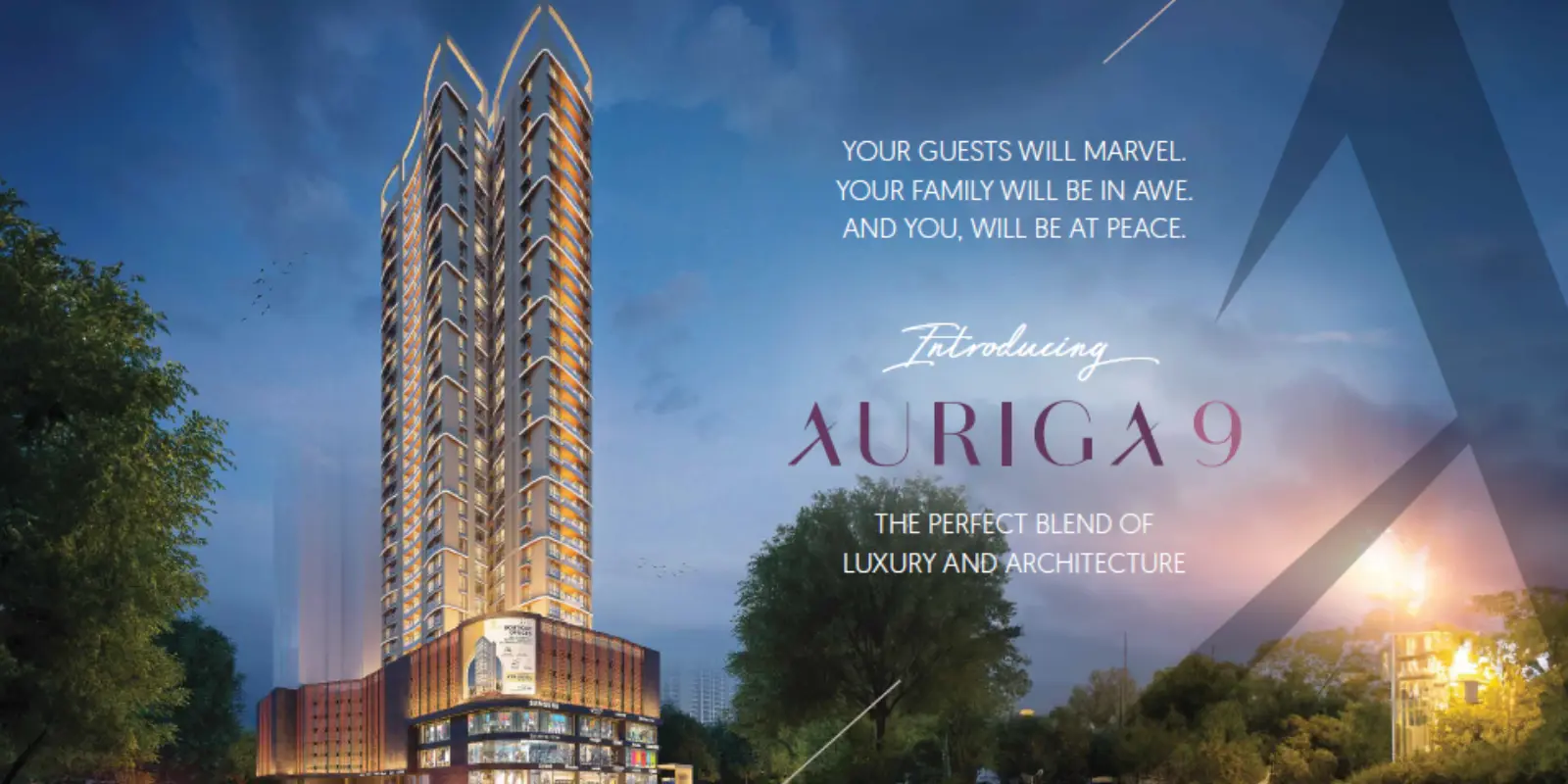
Auriga 9 by Bhatia Builders (Borivali West)
Auriga 9 serves as a useful case study in how developers in 2026 are responding to the Gujarati community's evolving upgrade cycle. This residential project is located in Jambli Galli off S.V. Road that is within walking distance of Borivali's established Gujarati residential clusters. It offers 2 to 4 BHK configurations designed around larger family layouts, private lobbies, and proximity to the area's temple and social infrastructure.
-
Spark Madhusudan CHS
Spark Madhusudan CHS is a community-oriented residential society in Vile Parle East, preferred by Gujarati families, offering 1 BHK to 4 BHK apartments with amenities like lifts, children's play area, power backup, rainwater harvesting and parking, located within the Gujarati Society in Vile Parle East. -
Atharv Navasamaj
Located in a well-established Gujarati residential pocket, Atharv Navasamaj attracts end-user families seeking long-term community living, proximity to temples, and culturally familiar surroundings rather than short-term investment returns. -
Happy Home Lily Kunj
Happy Home Lily Kunj is another example of a residential project embedded within a culturally homogeneous neighbourhood. Projects of this nature are often favoured for their community continuity, where residents value familiarity, shared lifestyle norms, and long-term neighbourhood relationships over high-density luxury formats. -
NSB Parkway Manor
NSB Parkway Manor is a residential project offering 3 BHK homes in Vile Parle's Gujarati Society, known for its family-oriented layout, strong connectivity, quality construction, and proximity to schools, hospitals, and local amenities.
Economic Contribution and Market Stability
The Gujarati community's strong presence in Mumbai's financial and trading sectors directly impacts real estate liquidity and stability.
- Gujaratis dominate large portions of the diamond trade, bullion markets, stockbroking, and wholesale commerce.
- Capital generated from these sectors is frequently redirected into residential upgrades, second homes, redevelopment investments, and commercial spaces.
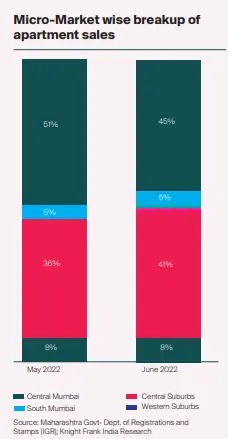
(Image Source: knightfrank Mumbai Residential Property Update PDF)
In recent peak cycles, Central Mumbai suburbs accounted for nearly 41% of all property registrations, with areas like Ghatkopar and Mulund playing a major role.
The 2026 Investment Outlook for Mumbai's Gujarati Community
As Mumbai's real estate market evolves in 2026, the investment behaviour of the Gujarati community continues to play a defining role. Three key trends stand out that highlight how the community is shaping both demand and development patterns across the city and the wider MMR.
-
Redevelopment-Led Upgrades
The Gujarati community is a key driver of Mumbai's redevelopment cycle, upgrading older society buildings into modern high-rises. This approach enables families to enhance living standards while preserving long-established social, cultural, and neighbourhood ties.
-
Fourth Mumbai Expansion
High-net-worth individuals from the Gujarati community are increasingly investing in emerging growth corridors such as Alibaug and the Navi Mumbai Airport belt. These regions are viewed as long-term lifestyle and legacy assets, combining second-home living with strategic land appreciation driven by future infrastructure development.
-
Sustainable Luxury Shift
For the Gujarati community, luxury in 2026 is increasingly defined by sustainability. IGBC-certified developments, energy-efficient construction, rainwater harvesting, solar integration, and EV-ready parking are now viewed as essential markers of modern success rather than optional lifestyle upgrades.
Gujarati Influence Extends Beyond Mumbai
As property prices in Mumbai continue to rise, Gujarati families have expanded into MMR satellite regions such as Mira Road, Bhayander, Virar, and Nallasopara.
Demographic estimates suggest:
- Gujaratis form over 28.30% of the population in Virar
- Around 17.82% in Nallasopara
These areas offer affordability while allowing families to maintain cultural continuity, often leading to similar community clusters forming outside Mumbai city limits.
Conclusion
While Gujaratis make up roughly 11.5% to 12% of Mumbai's population, their influence on the city's real estate extends far beyond mere numbers. As astute investors, long-term property holders, and leading developers, the Gujarati community shapes market trends, drives demand in key suburbs, and defines the character of entire neighbourhoods.
From heritage business districts to rapidly growing satellite towns, their investment patterns and community-centric preferences have created distinct pockets of high-value real estate. As Mumbai continues to grow vertically and expand horizontally, the Gujarati community remains its most sophisticated and steadfast architect of value.
Frequently Asked Questions
-
Which areas in Mumbai have the highest Gujarati community presence?
Borivali West, Kandivali, Vile Parle, and Walkeshwar in South Mumbai have the most visible Gujarati residential clusters. Outside Mumbai, Virar and Nallasopara have significant community concentrations, estimated at over 28% and 17% of local populations respectively.
-
Why do Gujarati families prefer Borivali West for residential living?
There are many factors that make it culturally familiar and functionally convenient for multi-generational Gujarati families. They mainly include western line rail connectivity, proximity to Sanjay Gandhi National Park, a high density of Jain and Vaishnav temples, predominantly vegetarian housing societies, and a well-established social fabric built over decades.
-
Are Gujarati developers dominant in Mumbai's real estate market?
Several of Mumbai's largest developers by sales volume and land bank are Gujarati-led, including the Lodha Group, Hiranandani Group, Ajmera Realty, and Adani Realty.
-
Why do Gujarati families prefer homes near temples?
Many Gujarati families prefer homes near temples because it allows easy access to daily prayers, religious festivals, and community gatherings, helping them stay connected to their spiritual traditions and cultural values.
-
What are the top real estate investment trends for Mumbai's Gujarati community?
Top real estate trends among the Gujarati community in Mumbai include investing in larger family homes, choosing neighbourhoods with strong community presence, preferring vegetarian-friendly societies, and prioritising locations near business hubs, temples, and well-connected transport infrastructure.
If you found this article insightful, you can explore our other real estate publications for more expert guidance and inspiration.