

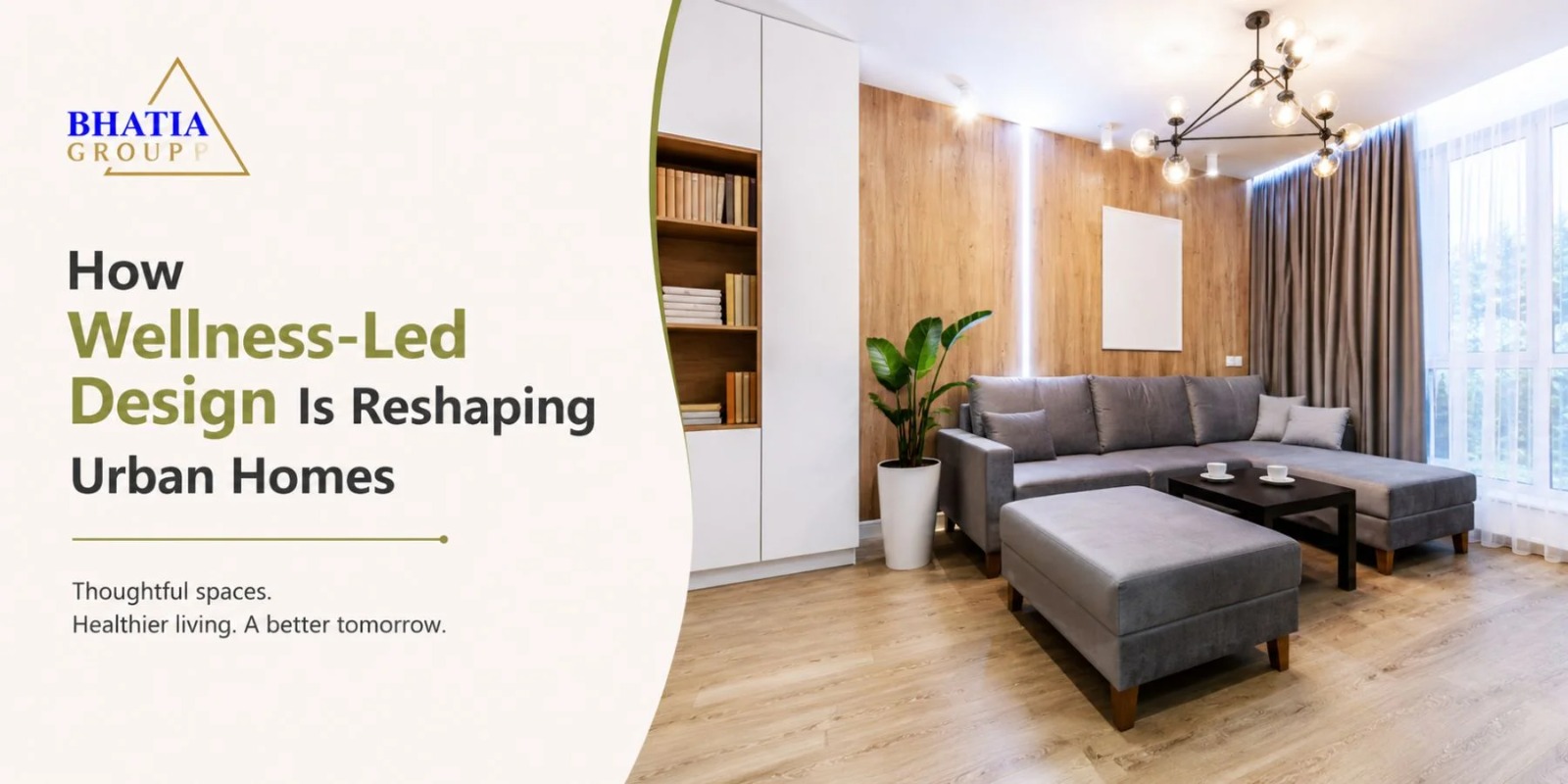
There was a time when buying a home meant ticking boxes — number of bedrooms, proximity to the station, maybe a half-decent view. Somewhere along the way, that checklist quietly grew a new entry: does this place make me feel good? That single question is behind one of the biggest shifts in residential design today, and it's why healthy home design has moved from a niche wellness trend into a mainstream expectation for anyone shopping for property in a city.
City living has always come with trade-offs. You get convenience, culture, and career opportunities, but you also get noise, pollution, cramped layouts, and a chronic shortage of sunlight. For decades, homebuyers simply accepted this as the cost of doing business in urban India. That acceptance is fading fast. People who spend nine or ten hours a day in artificially lit offices don't want to come home to more of the same. They want their living space to actively counteract the stress of city life, not add to it.
What "Wellness-Led" Actually Means
The term gets thrown around a lot, so it's worth being specific. Wellness-led design isn't about adding a yoga corner or a meditation app subscription as a sales gimmick. It's a ground-up approach to architecture and interiors that treats physical and mental well-being as a design input, on par with structural safety or cost efficiency.
In practice, this shows up as wellness homes built around a few non-negotiable principles: clean air circulation, abundant daylight, biophilic elements (real connection to greenery, not just potted plants in a brochure render), low-toxicity materials, and layouts that reduce psychological clutter. None of this is new science — architects have understood the link between built environment and human health for over a century. What's new is that developers are finally designing for it from day one, rather than treating it as an expensive afterthought.
The Daylight Problem Nobody Talks About
Ask any urban apartment dweller about their biggest gripe, and a startling number will mention the same thing: their home is dark. Not poorly decorated — actually short on natural light. Tall neighbouring towers, narrow plot widths, and windows that face the wrong direction have created a generation of apartments that need their lights switched on at 4 PM.
This matters more than most people realize. Insufficient daylight disrupts circadian rhythm, affects mood, and has been linked to higher rates of fatigue and low-grade depressive symptoms. It's also one of the easiest things architects can fix if they design for it early — through better tower orientation, larger window-to-wall ratios, and unobstructed sightlines.
This is exactly why natural light homes have become such a strong selling point rather than a “nice-to-have.” Buyers have started actively asking how many hours of direct sun a flat receives, what direction the main bedroom faces, and whether the living room gets cross-ventilation. It's no longer a question reserved for vastu enthusiasts — it's basic due diligence.
Why Borivali West Is Quietly Becoming a Wellness Hub
Mumbai's western suburbs have always had a geographic advantage that's easy to overlook: proximity to green cover. Borivali sits right next to the Sanjay Gandhi National Park, one of the largest urban forests in the world, giving the area a natural air-quality and visual-greenery edge that's hard to replicate in denser parts of the city.
Developers have started building around this advantage rather than ignoring it. The new wave of luxury apartments in Borivali West are increasingly designed with larger balconies, better cross-ventilation, and layouts oriented to take advantage of the surrounding greenery and open skylines instead of facing into a wall of neighbouring buildings. If you're exploring this micro-market, it's worth looking at how Bhatia Builders luxury apartments in Borivali approach this — the focus on space, light, and air quality reflects exactly the kind of wellness-first thinking this article is describing, rather than the cookie-cutter apartment blocks that dominated the suburb a decade ago.
This isn't just a Borivali story, though — it's a pattern playing out wherever land near green belts is still developable. Wellness has become the differentiator that justifies a price premium, the same way “sea-facing” or “metro-adjacent” used to.
How This Shows Up in Modern Urban Homes
Walk through a newly launched residential project today, compared to one from ten years ago, and the differences are immediately visible:
- Air quality systems are built into the architecture, not bolted on as an afterthought air purifier in the corner of a room.
- Material choices lean toward low-VOC paints, natural stone, and finishes that don't off-gas chemicals into a closed apartment.
- Layouts favour open, breathable floor plans over the maze-like room divisions that were common when builders optimized purely for square footage.
- Common areas increasingly include green courtyards, jogging tracks, and water features — not as luxury add-ons, but as functional extensions of the wellness promise.
- Acoustic design gets real attention, since noise pollution is one of the most underrated stressors in dense cities.
Taken together, these choices define what modern urban homes look like in 2026: places engineered to support the people living in them, not just shelter them.
A Shift That's Here to Stay
Skeptics might call this a marketing trend that will fade once the next design fad arrives. But the underlying driver — rising awareness of how the environment affects health — isn't going anywhere. If anything, post-pandemic life made people hyper-aware of how much time they actually spend at home, and how much that environment shapes their mood, sleep, and stress levels.
For buyers evaluating their next home, the smartest move is to stop treating wellness features as bonus points and start treating them as baseline requirements, the same way safety certifications or RERA compliance became non-negotiable. Ask about sunlight hours. Ask about ventilation. Ask what's actually in the walls and floors, not just how they look.
Urban India's housing stock is slowly catching up to what residents have wanted for years: homes that don't just shelter them, but actively support how they feel, think, and function every single day. That's the real story behind the rise of wellness-led design — and it's only getting started.